

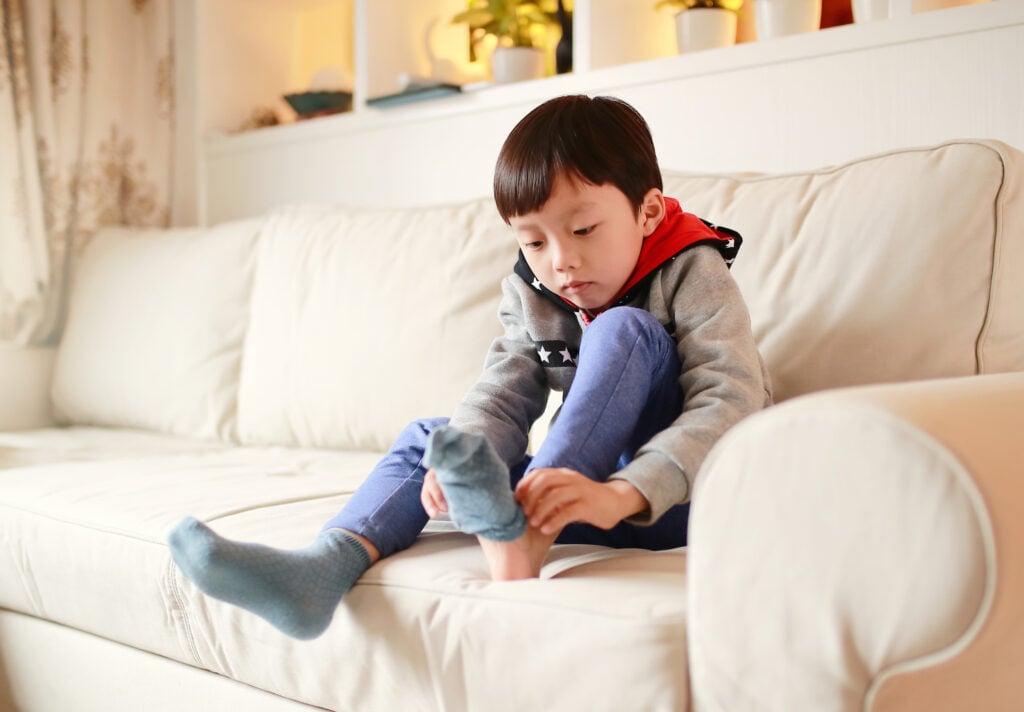
Do you ask your child to put on their shoes, only to find them still barefoot ten minutes later? Is your child eager to act independently like a “big kid,” but buttons cause frustration, or brushing their teeth or hair feels uncomfortable no matter how gently you try to help?
Take heart—you are not alone.
Everyday routines like getting dressed, brushing teeth, and washing up require a surprising number of skills to work together at the same time. When one part of that process is harder for your child to manage, the whole routine can feel overwhelming for both of you.
Understanding what is making these tasks difficult for your child is the first step toward making mornings easier and helping your child feel more confident handling self-care routines independently.
Why Dressing and Self-Care Can Be Difficult for Your Child
Getting dressed might seem simple to an adult, but for a child, it calls on a wide range of physical, sensory, and cognitive skills all at once. When your child struggles to button a shirt, pull on pants, or tolerate the feel of certain fabrics, it is often because of one or more of the following reasons:
- Sensory sensitivities. Your child’s nervous system may respond more intensely to sensory input, making certain textures, sounds, or sensations feel genuinely uncomfortable. Sock seams, waistbands, tags, or the feeling of water on their face during grooming can feel bothersome or even painful, making it hard to get through routine tasks without distress.
- Fine motor challenges. Tasks like fastening buttons, working zippers, tying shoes, or holding a toothbrush all require precise hand and finger coordination. If your child’s fine motor skills are still developing, these tasks may take more effort and feel more frustrating.
- Motor planning difficulties. Getting dressed requires your child to sequence a series of steps in the right order, such as putting on underwear before pants or shoes before heading out the door. Children who have trouble planning and organizing movement may lose track of where they are in a routine, even when they know what to do.
- Body awareness challenges. Your child needs a strong sense of where their body is in space to pull clothing over their head, push arms through sleeves, or fasten clothing without looking. When this ability is less developed, dressing can become a much bigger physical challenge.
Signs Your Child Is Struggling with Daily Routines
Every child develops at their own pace, but the following signs suggest your child may benefit from extra support with self-care skills:
- Becoming upset during dressing, grooming, or hygiene routines.
- Taking longer than expected to complete simple tasks like putting on shoes.
- Avoiding certain clothing materials or clothing with tags.
- Having a hard time buttoning, zipping, or fastening clothing independently.
- Getting dressed in a disorganized way, such as putting shoes on before pants or losing track of the steps in the middle of a routine.
- Reacting strongly to hair brushing, face washing, teeth brushing, or nail trimming.
When these routines regularly lead to frustration, stress, or delays, occupational therapy can help your child build the skills they need to complete them with more confidence and independence.
How Occupational Therapy Helps Children With Dressing and Self-Care
Occupational therapy helps children build the skills they need for everyday life, and self-care independence is one of its core areas of focus. A pediatric occupational therapist will assess the underlying physical, sensory, and developmental challenges affecting your child’s dressing and grooming skills and create a plan tailored to their specific needs.
Through engaging, playful therapy, your child’s therapist may work on:
- Using hands for everyday tasks. Strengthening the small muscles of the hands and improving finger coordination so tasks like buttoning, zipping, and using utensils feel easier and more manageable.
- Managing sensory input during self-care routines. Helping your child’s nervous system become more comfortable with textures, touch, and the sensory demands of grooming so that clothing and hygiene routines feel less overwhelming.
- Following multi-step routines. Building your child’s ability to move through routines in a consistent, organized way so they can get dressed more independently without needing constant reminders or redirection.
- Understanding where their body is in space. Using movement-based activities to strengthen your child’s body awareness so they can manage dressing and other daily tasks more confidently.
What Occupational Therapy for Dressing and Self-Care May Look Like
Occupational therapists understand that children learn best when they feel comfortable and are having fun. Sessions are tailored to your child’s specific needs and delivered in a warm, supportive environment where your child can explore and build skills at their own pace.
A session focused on dressing and self-care skills might include:
- Developing the body awareness needed for dressing through obstacle courses and fun movement activities
- Strengthening hand and finger coordination through playful activities using buttons, zippers, and lacing boards
- Building comfort with different textures and sensations through hands-on sensory play
- Practicing real-life dressing and grooming routines to build confidence with the tasks they face at home each day
Your child’s therapist will also share practical strategies you can use at home so your child can continue to make progress between sessions. Over time, these targeted activities can help your child feel more comfortable getting dressed, move through self-care routines with less frustration, and build the confidence to do more on their own.
Reach Out to Sensational Development for Support With Self-Care Skills
If your child needs extra support with dressing, grooming, or other self-care routines and you are in the Massapequa or East Northport, NY, area, call Sensational Development at (516) 799-2900 or fill out our online contact form to speak with a pediatric occupational therapist. We would love to help your child feel more capable, gain confidence in their self-care skills, and take pride in doing more on their own.
