

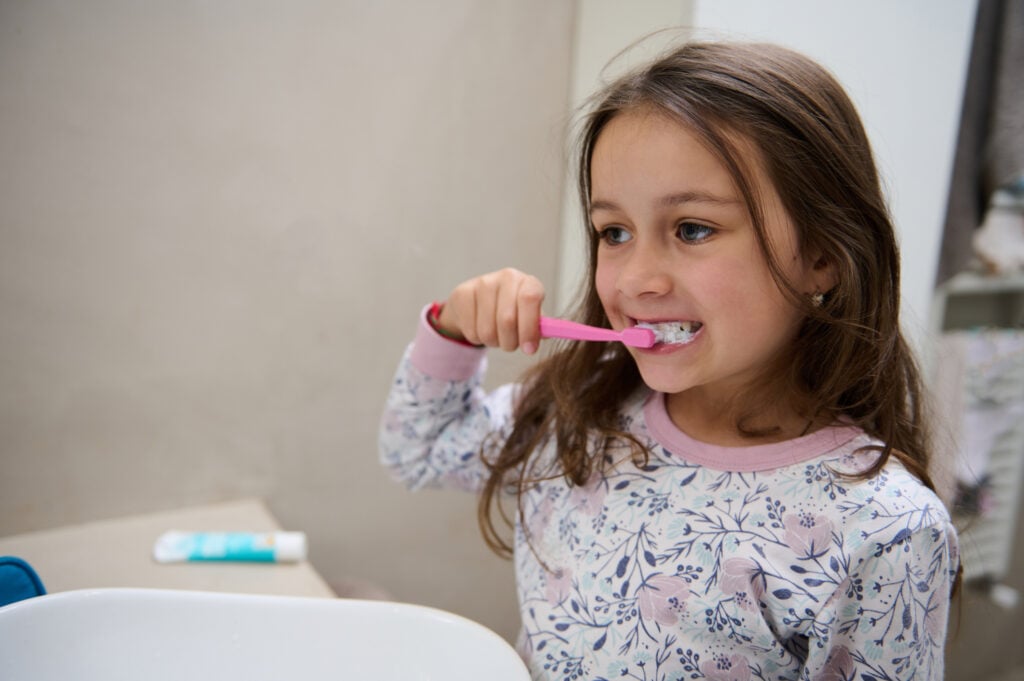
For many families, brushing teeth is just another part of the morning and bedtime routine. But for some children, it can feel like a major challenge.
Maybe your child cries when it’s time to brush, refuses to open their mouth, gags when the toothbrush touches their teeth, or becomes upset before brushing even begins. As a parent, you may wonder why something so simple feels so difficult.
The good news is that your child is probably not being stubborn or difficult on purpose. Understanding the reason behind the struggle can help you better support your child and make this daily routine less stressful for everyone.
Sensory Processing Can Make Toothbrushing Feel Uncomfortable
The mouth contains a large number of sensory receptors that help us detect touch, texture, temperature, and pressure. For some children, these sensations are processed differently. If your child is overly sensitive to sensory input, toothbrushing may feel much more intense than it does for most people.
They may be bothered by:
- The feeling of bristles on their gums
- The taste of toothpaste
- The texture of foam in their mouth
- The sensation of water or rinsing
- Vibrations from an electric toothbrush
What feels mild or routine to one child may feel overwhelming to another. As a result, your child may avoid brushing because the experience feels genuinely uncomfortable.
Fine Motor Skills Also Play a Role
While sensory challenges are often part of the picture, fine motor skills can contribute as well.
For children with fine motor delays, this routine can be surprisingly difficult. Brushing teeth requires children to:
- Grip the toothbrush correctly
- Coordinate hand movements
- Apply the right amount of pressure
- Reach different areas of the mouth
- Brush for an appropriate amount of time
If brushing feels frustrating or physically challenging, children may become resistant to doing it. Sometimes what looks like refusal is actually a child trying to avoid a task that feels too hard.
How Occupational Therapy Can Help
Occupational therapists look beyond behavior to identify what is making toothbrushing difficult. At Sensational Development, we evaluate the sensory, motor, and developmental factors that may be contributing to your child’s challenges.
Depending on your child’s needs, therapy may focus on:
- Improving sensory processing and regulation
- Reducing oral sensitivities
- Strengthening fine motor skills
- Building tolerance for oral care activities
- Creating routines that support success at home
Through playful, individualized activities, children can gradually become more comfortable with the sensations involved in toothbrushing while developing the skills needed to complete the task more independently.
Reach Out to Sensational Development for Expert Support
Many children who struggle with toothbrushing can learn to tolerate and eventually participate more comfortably in the process. As sensory regulation improves and motor skills develop, daily routines often become less stressful and more successful.
At Sensational Development, our occupational therapists help children build the skills they need to participate confidently in everyday activities, including self-care routines like brushing their teeth. If toothbrushing has become a daily battle in your home, we’re here to help. Contact Sensational Development today at (516) 799-2900 to learn how occupational therapy can support your child’s success.
