

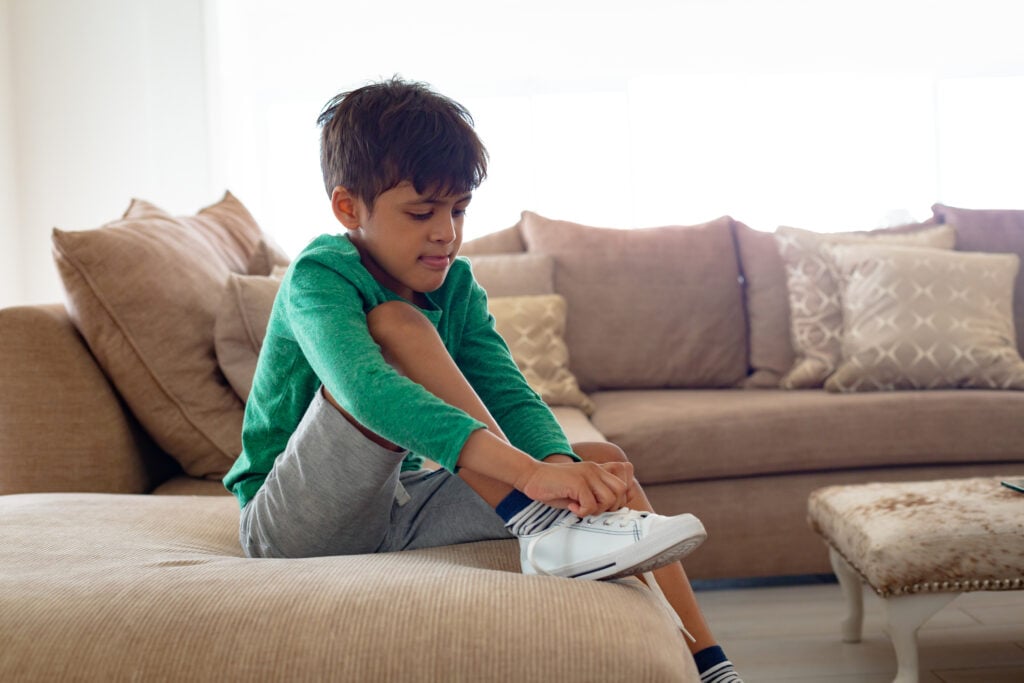
Learning to dress independently is an exciting milestone for your child. Tasks like buttoning a shirt, pulling up a zipper, or tying shoes help your child gain a sense of pride as they begin managing their own daily routines. When a child can get themselves ready, they feel more capable and ready to take on the day just like the big kids.
However, these skills can be tricky. Buttons and shoelaces require precise movements and coordination that can feel overwhelming at first. For many children, the pressure to get dressed quickly in the morning leads to frustration.
The secret to success is moving this practice away from the morning rush and into the world of play. Through fun and games, your child can build the skills they need to get dressed with ease each morning.
Why Dressing Skills Take Practice
Dressing is a complex physical workout for a child. It relies on fine motor strength, finger dexterity, and bilateral (involving both sides of the body) coordination, which is the ability to use both hands together. It also requires motor planning, which is the brain’s ability to remember and perform steps in the correct order.
Because so many skills have to work together, it is completely normal for your child to need time to feel confident and capable while dressing themselves. Play-based activities remove the stress of the clock, allowing your child to build the physical foundations they need to move with confidence and handle their own routines with ease.
Play-Based Ways to Master the Morning Routine
When dressing skills are practiced through games, your child is more likely to stay motivated and proud of their progress. These playful experiences make it much easier for your child to transfer their new skills to the real world.
Practicing Buttons Through Play
Buttoning feels like a win when it is part of a game. To help your child master the push and pull of buttons, try:
Dressing up in costumes or oversized shirts with large buttons during pretend play
Hiding small toys inside buttoned pockets or zippered pouches for your child to find
Practicing buttoning clothing on a favorite doll or stuffed animal where the button is easier to see
Practicing Zippers Through Play
Zippers require one hand to hold steady while the other pulls. You can build this “teamwork” between the hands by:
Using backpacks or lunch bags with zippers to store “treasures” during a scavenger hunt
Wearing costumes with easy-to-grip zipper pulls so your child can practice zipping independently
Opening and closing colorful zipper pouches during play
Practicing Shoe Skills Through Play
Tying shoes is one of the most complex tasks a child learns. You can make it feel manageable by:
Giving your child a shoe to lace so they can practice the “in and out” movement needed to tie their shoes
Practicing tying simple knots with colorful yarn or ribbon on a table where your child can see each step clearly
Letting your child practice tying a shoe placed on their lap so they can focus on their fingers without leaning over
How Occupational Therapy Can Help With Dressing Skills
If dressing tasks continue to cause your child frustration, a pediatric occupational therapist can help identify the specific developmental skills that need practice and create a play-based therapy program that focuses on:
Developing the small muscles in the hands and fingers needed to manage buttons and zippers
Teaching both hands to work together so your child can stabilize clothing while fastening it
Practicing the sequence of dressing steps so tasks become more automatic and confident
Building your child’s confidence and self-esteem by celebrating each success and gradually introducing new challenges your child can take pride in mastering
Reach Out to Sensational Development for Support
If your child is having difficulty with dressing skills and you live in the Massapequa or East Northport, NY area, call Sensational Development at (516) 799-2900 or fill out our online contact form to speak with a pediatric occupational therapist. We look forward to helping your child build the coordination and confidence they need to manage their daily routines with independence and pride.
