
Many parents notice that their child seems to tire easily, struggles with posture, or has difficulty keeping up with peers during physical activities. While these challenges can have many causes, one common factor is low muscle tone. Understanding what low muscle tone is and how it affects everyday life can help families recognize when additional support may be beneficial.
What Is Low Muscle Tone?
If your child seems unusually tired, struggles with physical activities, has poor posture, or appears less coordinated than their peers, you may have heard someone mention the term “low muscle tone.”
Low muscle tone, also called hypotonia, refers to decreased tension within the muscles when the body is at rest. It does not necessarily mean a child is physically weak. In fact, many children with low muscle tone can be quite strong.
However, their muscles often have to work harder to maintain posture, stability, and movement throughout the day. Because of this, everyday activities that seem simple for other children may require significantly more effort.
What Causes Low Muscle Tone?
Low muscle tone can occur for many different reasons.
For some children, it is part of their natural development and may not be linked to a specific diagnosis. For others, low muscle tone can be associated with developmental delays, genetic conditions, neurological differences, sensory processing challenges, or other medical conditions.
Regardless of the underlying reason, identifying low muscle tone early can help children receive the support they need to develop strength, endurance, and functional skills.
What Are the Signs of Low Muscle Tone?
The signs of low muscle tone can vary from child to child. Some common signs include:
- Poor posture when sitting or standing
- Slouching frequently
- Leaning on furniture, walls, or other people for support
- Becoming tired more quickly than peers
- Difficulty keeping up during physical activities
- Delayed motor milestones
Clumsiness or poor coordination - Difficulty with balance
Challenges using playground equipment - Frequently sitting in “W” positions
- Difficulty maintaining attention during seated tasks
Because children with low muscle tone often work harder to stabilize their bodies, they may appear fatigued after activities that seem easy for others.
How Low Muscle Tone Can Affect Daily Activities
Low muscle tone impacts much more than sports and physical play. Throughout the day, children rely on core strength and postural stability to participate in everyday activities. When those systems are working harder than they should, daily tasks can become more challenging.
You may notice difficulties with:
School Activities
Children with low muscle tone may struggle to sit upright at a desk for extended periods. As their muscles become tired, they may slouch, lean on their hands, rest their head on the desk, or frequently shift positions. Fatigue can also affect attention and participation in classroom activities.
Fine Motor Skills
Strong, stable shoulders and core muscles provide the foundation for fine motor tasks. When stability is reduced, children may have difficulty with skills like handwriting, using scissors, coloring, self-feeding, and more. These activities often require more effort, which can lead to frustration or avoidance.
Self-Care Skills
Low muscle tone can also affect daily routines such as getting dressed, brushing teeth, climbing stairs, and much more. Children may need more time and energy to complete these activities independently.
Play and Recreation
Playgrounds, sports, and active games often require balance, coordination, endurance, and strength. Children with low muscle tone may avoid these activities because they feel physically challenging. Over time, this can impact confidence and social participation.
How Occupational Therapy Can Help
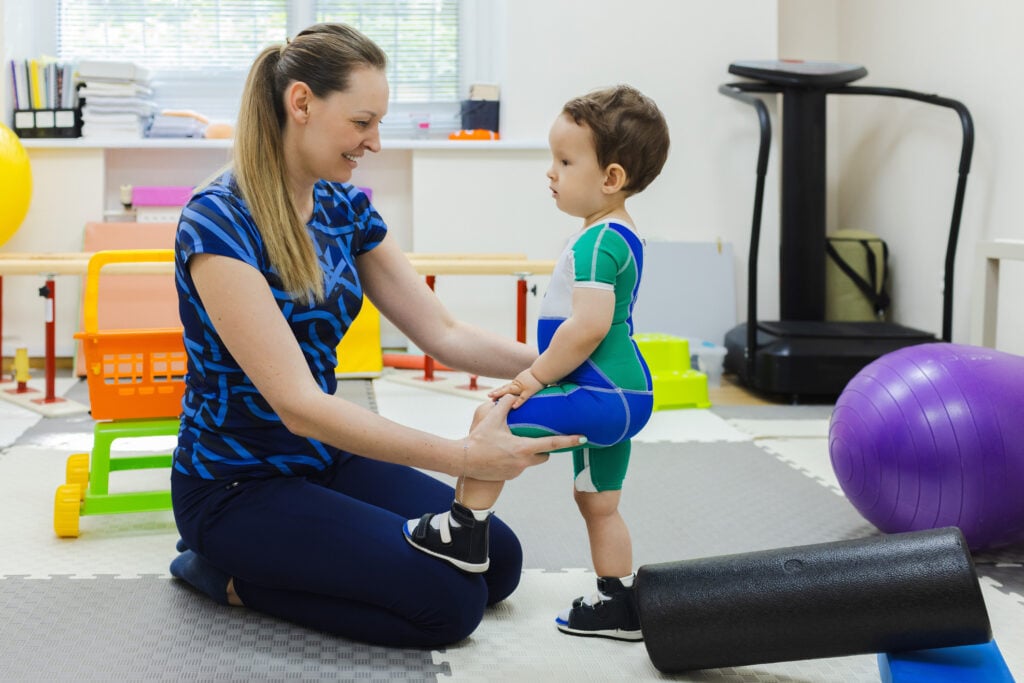
Occupational therapists help children develop the strength, stability, coordination, and motor skills needed for daily activities.
At Sensational Development, our therapists use fun, play-based activities to help children improve their postural control, endurance, body awareness, and functional skills. Therapy is always individualized to your child’s unique strengths and challenges.
By addressing the underlying factors contributing to difficulty, we help children participate more successfully at home, at school, and in the community.
Reach Out to Sensational Development for Expert Support
Low muscle tone can affect many aspects of a child’s daily life, but with the right support, children can develop the skills they need to become more independent and confident.
If you’re concerned that low muscle tone may be affecting your child’s development, the occupational therapists at Sensational Development are here to help. Contact our team today to learn more about how an evaluation can identify your child’s needs and support their success.
