
Have you ever noticed your child looking directly at you while you speak, yet they seem to miss the message entirely? Perhaps you find yourself repeating the same three directions every morning, or you notice your child withdrawing when a room gets too noisy or the conversation moves too fast.
When these moments happen, it is natural to wonder if your child is simply distracted or if something else may be making it harder for them to understand what they hear. In some cases, these challenges may be related to auditory processing disorder (APD), where your child can hear sounds clearly but may need extra time to understand what they mean.
The good news is, with the help of an occupational therapist, your child can build the skills they need to better understand what they hear. This helps them follow conversations, respond in the moment, and keep up with others at home, at school, and on the playground.
What Is Auditory Processing Disorder?
APD affects how your child’s brain recognizes, organizes, and makes sense of sounds, especially spoken language. Your child’s hearing may be normal, but their brain may need extra time to interpret what they hear.
This can make it harder for your child to:
- Keep up with conversations
- Understand what’s being said in noisy or busy environments
- Remember verbal instructions
- Tell the difference between similar-sounding words
Signs of Auditory Processing Disorder
Every child is unique, but common signs of APD include:
- Having trouble following spoken, multi-step directions
- Needing to hear something more than once in order to understand
- Feeling overwhelmed or withdrawing in busy or noisy environments
- Understanding written information or pictures better than spoken words
- Becoming frustrated or tired during longer conversations or when listening for extended periods
Recognizing these signs early can help your child get the right support before listening challenges begin to affect their confidence, school performance, daily routines, and interactions with others.
How Is Auditory Processing Disorder Diagnosed?
Because APD is a complex issue involving how the brain interprets sound, the process of diagnosis typically involves a few clear steps:
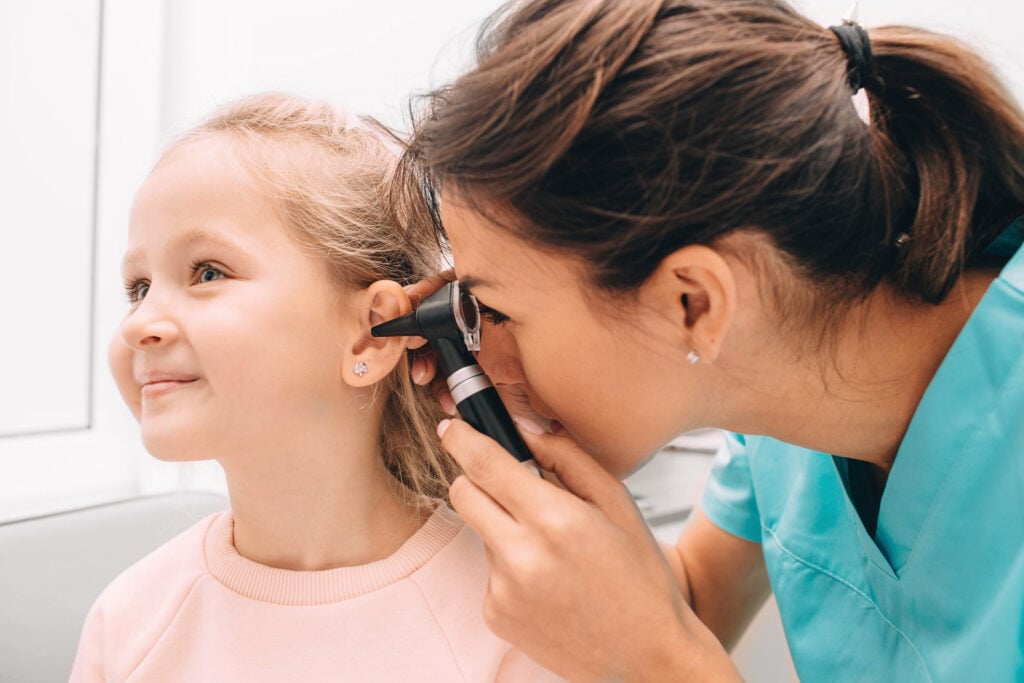
- Hearing Check: An audiologist performs a standard hearing test to confirm your child’s ears are picking up sounds correctly and rule out hearing loss.
- Specialized APD Testing: If hearing is normal, the audiologist uses targeted tests to evaluate how your child processes speech in real-world situations, such as understanding what is being said in noisy environments or when instructions are given quickly.
- Diagnosis: Based on these results, the audiologist can determine whether your child has APD and identify the areas where they have the most difficulty understanding what they hear.
Once APD is identified, the focus shifts to helping your child manage these challenges in everyday life. This is where occupational therapy helps bridge the gap between diagnosis and daily success.
How Occupational Therapy Helps
Occupational therapy focuses on how APD affects your child’s ability to get through the day. Rather than focusing only on how sound is processed, an occupational therapist looks at how listening difficulties impact learning, social interaction, and daily activities, and how your child responds when they miss information or cannot keep up with what is being said.
Therapy then builds practical strategies to help your child stay focused, follow directions, and keep up with what is being said during everyday activities.
Your child’s therapist may work on:
- Improving your child’s ability to understand spoken information when there are background sounds
- Helping your child follow multi-step directions more independently without becoming overwhelmed
- Strengthening your child’s ability to understand and retain spoken information so they do not miss key details
- Helping your child stay engaged and keep up with conversations in daily life
What Occupational Therapy for Auditory Processing Disorder May Look Like
Occupational therapy sessions for APD are designed to feel like purposeful play rather than a classroom lesson. Because listening is not just about hearing—it also depends on attention, movement, and how your child manages distractions—a therapist may use a gym environment to help your child practice staying focused on what they hear even when their surroundings are busy or distracting.
A session often includes:
- Interactive Listening Games: Using obstacle courses where the “rules” change mid-movement, requiring your child to listen for a specific code word or sound cue before moving to the next task. This helps your child practice filtering out background noise to understand what is being said.
- Multi-Sensory Listening Tasks: Engaging your child in a physical balance activity, such as using a swing or bolster, while following a story or answering questions. This strengthens your child’s ability to process speech even when the body is active or the environment is distracting.
- Simulated Busy Environments: Introducing low-level background noise while your child follows spoken directions to complete a focused task. This helps your child practice understanding what is being said when other sounds are present.
- Social Coordination Activities: Using games that require your child to follow a partner’s verbal directions to complete a shared goal. This mimics the fast-paced nature of the playground and builds the confidence needed to join in on conversations rather than watching from the sidelines.
Through these targeted activities, your child begins to process spoken information more efficiently and with less effort. Over time, this can make it easier for your child to follow directions and stay engaged in conversations, supporting stronger learning, greater confidence, and more meaningful connections with others at home, at school, and with peers.
Reach Out to Sensational Development for Help
If your child is struggling to follow directions, keep up with conversations, or make sense of what they hear, and you are in the Massapequa or East Northport, NY, area, call Sensational Development at (516) 799-2900 to speak with one of our pediatric occupational therapists. We are here to help your child bridge the gap between hearing and understanding so they can confidently join in conversations and feel more connected to the world around them.
