

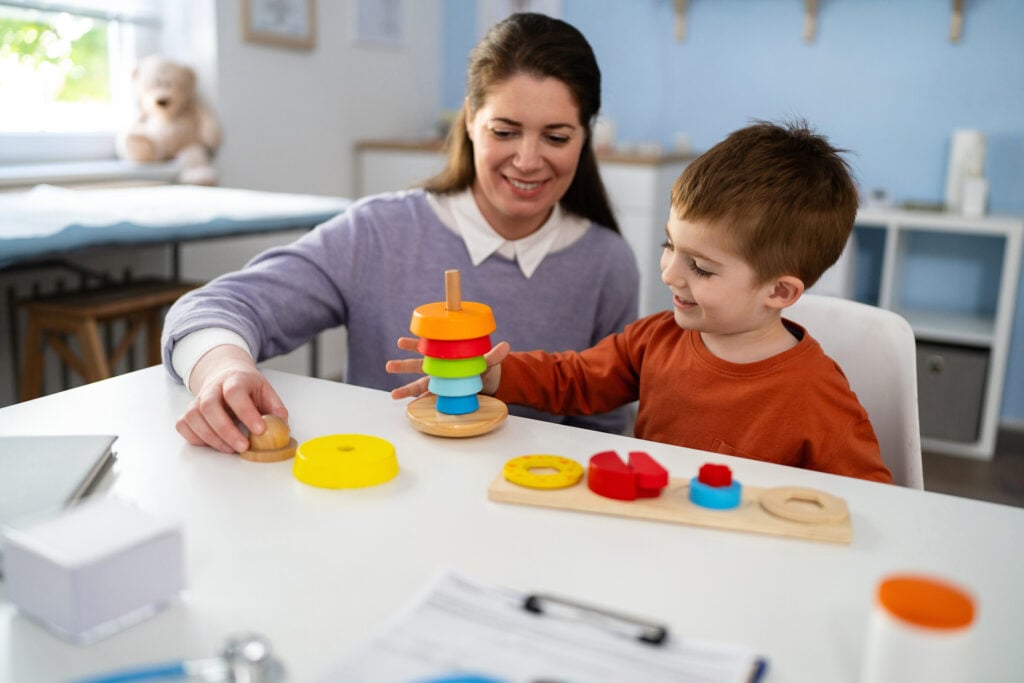
When most people think of pediatric occupational therapy, handwriting and fine motor skills are often the first things that come to mind. But the work of an occupational therapist extends far beyond helping children hold a pencil or use scissors.
Pediatric occupational therapy can support many of the skills your child uses throughout the day, from moving and playing to eating, getting dressed, managing sensory experiences, regulating emotions, solving problems, and becoming more independent.
So, how do you know whether occupational therapy could benefit your child? Here are some of the different areas pediatric OTs can address and the signs that your child could use some extra support.
1. Fine Motor Skills
Fine motor skills allow children to use their hands and fingers for small, controlled movements. Your child could benefit from occupational therapy if they struggle with activities such as:
- Holding and using crayons, markers, or pencils
- Cutting with scissors
- Manipulating small toys and objects
- Using buttons, zippers, and other fasteners
- Using utensils
- Opening containers and packages
Occupational therapists can help children build the hand strength, dexterity, coordination, and fine motor control they need for these everyday activities.
2. Sensory Processing
Does your child cover their ears around certain sounds, refuse particular clothing because of how it feels, avoid swings or other movement, or constantly seek opportunities to jump, spin, crash, and climb?
These behaviors can sometimes indicate that your child struggles with processing sensory information. Occupational therapists can help identify your child’s individual sensory needs and develop strategies that help them feel regulated and participate more comfortably throughout the day.
3. Visual and Visual-Motor Skills
Visual-motor skills help children understand what they see and use that information to guide their movements. Your child could have difficulty in this area if they struggle to:
- Copy shapes, letters, or information from the board
- Complete puzzles
- Find an object among other items
- Keep their handwriting on the line
- Catch or hit a ball
- Judge distances or navigate around obstacles
Occupational therapy can help develop these skills for greater success at school, during play, and in everyday activities.
4. Emotional and Behavioral Regulation
Does your child have big reactions to small frustrations, struggle when plans change, have difficulty calming down, or become overwhelmed during transitions and everyday routines?
There can be many reasons behind these behaviors. Occupational therapists can look at factors such as sensory needs, body awareness, coping skills, and the demands of the activity or environment to help children develop strategies for regulating their emotions and behaviors.
5. Feeding and Mealtime Skills
Eating requires sensory, motor, coordination, and self-care skills to work together. Your child could benefit from additional support if they:
- Refuse many foods or have a very limited variety of foods they will eat
- Struggle with certain food textures
- Have difficulty using utensils
- Struggle to drink independently from an age-appropriate cup
- Have difficulty sitting and participating during family meals
Occupational therapists can identify which skills are making feeding and mealtimes challenging and help children become more comfortable and independent during meals.
6. Thinking, Planning, and Problem-Solving Skills
Your child might know what they need to do but have difficulty figuring out how to get started, remembering the steps, staying organized, or adjusting when something doesn’t go according to plan.
These thinking and planning skills are involved in everything from getting ready for school to completing an assignment or cleaning up toys. Occupational therapy can help children develop attention, sequencing, organization, planning, and problem-solving skills that support greater independence in their daily routines.
When Is It Time to Talk to an Occupational Therapist?
Every child has skills that take time to develop. The bigger question is whether a challenge is consistently interfering with your child’s ability to participate in everyday life.
If your child regularly avoids activities, becomes frustrated by everyday tasks, needs more assistance than expected, or has difficulty participating at home, at school, or during play, an occupational therapy evaluation can help you better understand what is getting in the way.
If you’re wondering whether occupational therapy could help your child, call Sensational Development at (516) 799-2900 to schedule a consultation today.
