

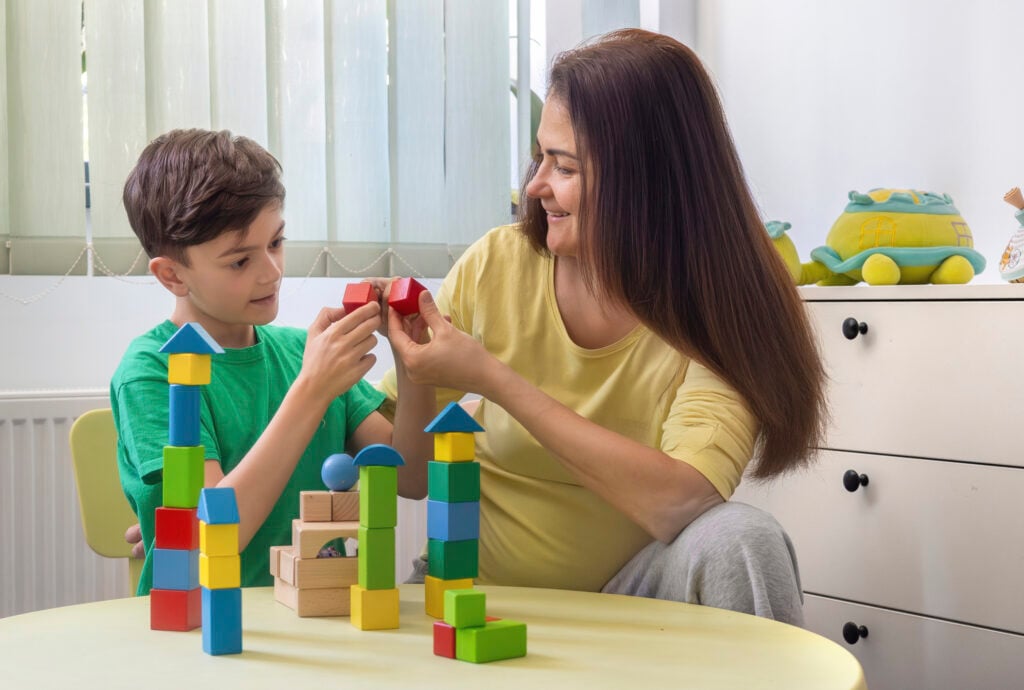
When you think of the word “occupation,” chances are a toddler doesn’t come to mind. After all, isn’t an occupation what someone does for a living?
However, your toddler does have a job — developing the skills needed to comfortably play, climb, and explore, feed themselves, participate in family routines, and interact with peers on the playground. So it’s natural to worry when your toddler seems to struggle with developing these important skills or their progress has stalled.
The good news is that pediatric occupational therapy can help get your child’s development back on track by building the foundational skills they need to thrive in their most important job: learning and growing.
What Is a Developmental Delay?
A developmental delay happens when your child is slower to reach certain milestones expected for their age.
Milestones are age-based skills that therapists use as benchmarks to determine whether a child’s development is progressing as expected. They are not strict deadlines, and every child develops at their own pace. But when a child consistently struggles to reach certain milestones, it may be a sign they could benefit from extra support.
Many developmental skills build on one another over time. When delays are identified and addressed early, especially during the toddler years, children often have an easier time building the skills needed for future learning, play, and daily activities.
Typical Occupational Therapy-Related Milestones
In pediatric occupational therapy, “occupations” are the everyday activities that fill your child’s day, such as playing, eating, dressing, and exploring the world around them. Occupational therapists look at how toddlers participate in these activities and whether they are developing the skills needed to engage comfortably in daily life.
While every child develops differently, some common occupational therapy-related milestones for toddlers include:
Fine Motor Skills and Hand Use
- Stacking blocks or handling toys
- Scribbling with crayons
- Picking up small objects with their fingers
- Attempting to use utensils during meals
Balance, Movement, and Coordination
- Climbing and exploring playground equipment
- Staying balanced while walking, squatting, or playing
- Coordinating movements during active play
- Participating comfortably in movement-based group activities
Sensory Processing
- Exploring different textures during play without becoming distressed
- Tolerating everyday sounds and environments
- Feeling comfortable with activities that include swinging or spinning
- Participating in and enjoying messy play activities
Self-Care and Daily Activities
- Feeding themselves with fingers or utensils
- Helping with simple dressing tasks
- Participating in handwashing or grooming routines
- Moving from one activity to the next without becoming overwhelmed
Signs Your Toddler May Need Extra Support
Every child develops differently, but certain signs may suggest your toddler could benefit from additional support through occupational therapy.
Common signs of developmental delays in toddlers include:
- Struggling to use their hands during play or at mealtimes
- Pulling away from textures like sand, grass, finger paint, or certain foods
- Becoming overwhelmed when moving from one activity to the next
- Struggling to stay balanced
- Avoiding climbing, swinging, or movement-based play
- Having trouble staying focused during simple activities
- Getting easily frustrated when trying something new
- Holding back from joining in with others or participating in new activities
- Reacting strongly to sounds, clothing textures, movement, or busy environments
- Needing to constantly move or crash into things to feel settled
- Having a hard time calming down after becoming upset or overstimulated
If delays in these areas are getting in the way of your toddler keeping up on the playground, feeling confident in their abilities, or simply enjoying time with friends and family, occupational therapy can help.
How Occupational Therapy Treats Developmental Delays
Occupational therapy helps toddlers build the foundational skills needed to comfortably play, explore, move through daily routines, learn new skills, and interact with others. Rather than focusing only on a single developmental delay, occupational therapists look at how your child’s challenges affect their overall ability to participate in everyday life.
Through individualized, play-based therapy, occupational therapists help toddlers improve their ability to:
- Use their hands for activities like grasping toys, stacking blocks, self-feeding, and early drawing
- Feel more comfortable with movement, textures, sounds, and other everyday sensory experiences
- Build the balance and body awareness needed for climbing, jumping, playground play, and sitting comfortably during activities
- Stay engaged during play activities and daily routines
- Move through play and everyday activities with greater coordination and confidence
- Manage frustration and transitions with less overwhelm
As these foundational skills improve, many toddlers become more confident trying new things, interacting with others, and feeling more at ease during everyday life.
What OT for Developmental Delays May Look Like
Occupational therapy for toddlers is designed to feel fun, engaging, and like play. Therapy sessions often involve movement, games, sensory exploration, and hands-on activities carefully chosen to support your child’s developmental needs.
Your child’s therapist may use activities such as:
- Creating obstacle courses that encourage climbing, crawling, balancing, and coordination during play
- Exploring sensory bins filled with rice, sand, water beads, or textured materials to help your child feel more comfortable with different sensations
- Using playdough, stacking toys, snapping puzzle pieces together, or grasping objects with tongs to strengthen hand muscles and fine motor coordination
- Practicing swinging, jumping, or movement-based games that support balance and body awareness
- Playing simple turn-taking games that encourage attention, interaction, and participation with others
- Practicing moving from one activity to the next to help your child build flexibility during everyday routines
With consistent practice, your child will become more comfortable and confident with daily activities, play, and interacting with others, and what once felt difficult will begin to feel effortless.
Reach Out to Sensational Development for Support
If you are concerned about your toddler’s development and are in the Massapequa or East Northport, NY, area, call Sensational Development at (516) 799-2900 to speak with one of our pediatric occupational therapists. We are here to help your child build the foundational skills they need to truly thrive in their most important job: being a kid.
