

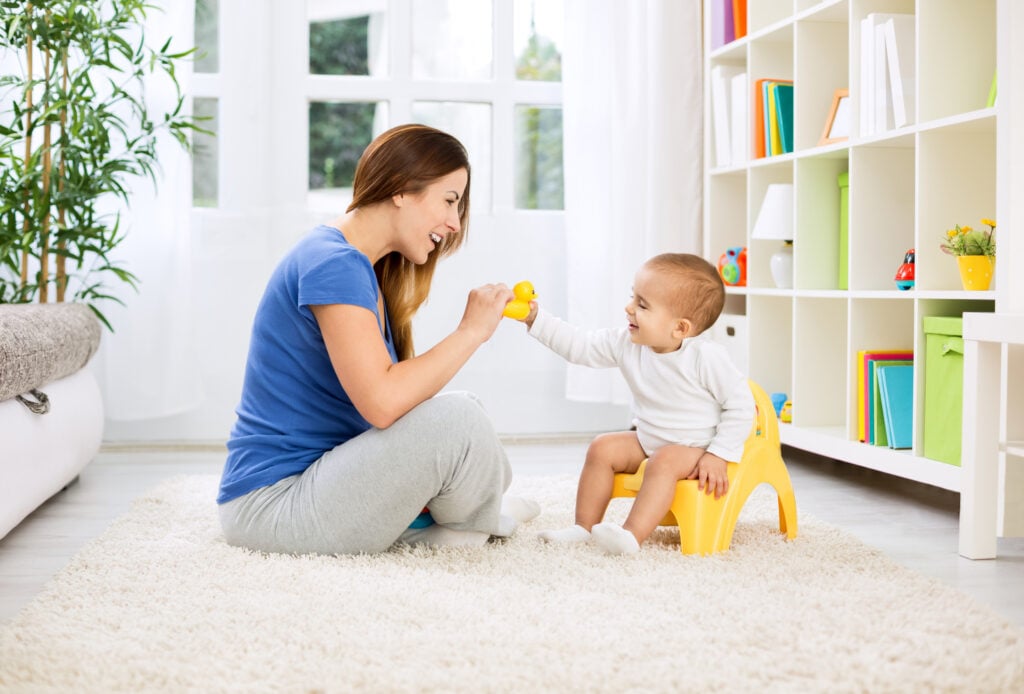
Potty training is one of the biggest milestones of early childhood. For many families, it can also be one of the most frustrating.
Some children seem to pick it up quickly, while others have accidents, resist using the toilet, or show little interest in potty training at all. If your child is struggling, it’s natural to wonder whether they’re simply taking a little longer or if something else might be getting in the way.
The good news is that potty training timelines vary widely. Many children need extra time, practice, and support before they feel comfortable and successful. However, there are situations where ongoing challenges may indicate that additional help could be beneficial.
What Is Considered a Typical Potty-Training Timeline?
Most children begin showing signs of potty-training readiness sometime between 18 months and 3 years of age. Some common signs of readiness include:
- Showing interest in the bathroom
- Telling you when they are wet or soiled
- Staying dry for longer periods of time
- Following simple directions
- Pulling clothing up and down
- Recognizing the urge to use the bathroom
While many children become reliably potty trained during the preschool years, occasional accidents are still common, especially during periods of stress, illness, or changes in routine.
Why Do Some Children Struggle with Potty Training?
There are many reasons potty training may be difficult.
For some children, the challenge is simply developmental. They may not yet have the physical, emotional, or cognitive (thinking) skills needed to consistently recognize and respond to their body’s signals.
For others, underlying factors may make potty training more complicated.
Sensory Processing Can Affect Potty Training
Many parents are surprised to learn that sensory processing plays an important role in toileting.
Children with sensory processing challenges may:
- Have difficulty recognizing internal body signals
- Not notice when they need to use the bathroom
- Be uncomfortable sitting on the toilet
- Become distressed by flushing sounds
- Avoid public restrooms because of noise, smells, or unfamiliar environments
- Resist certain clothing needed for independent toileting
For these children, potty training can feel overwhelming rather than straightforward.
Interoception Helps Children Recognize Bathroom Signals
One of the hidden sensory systems involved in toileting is called interoception. This is the sense that helps us recognize internal body sensations such as hunger, thirst, fatigue, and the need to use the bathroom.
Some children have difficulty accurately recognizing these signals. They may not realize they need to use the toilet until the urge becomes very strong or until an accident has already occurred.
This isn’t laziness or a lack of effort. It’s often a developmental skill that needs additional support.
Motor Skills and Independence Matter for Potty Training Readiness
Potty training involves more than simply recognizing the need to go. Children also need the motor skills to:
- Get to the bathroom quickly
- Pull clothing up and down
- Climb onto or sit safely on the toilet
- Wipe effectively
- Wash their hands afterward
If these tasks feel physically difficult, children may become frustrated or avoid the process altogether.
When Should Parents Seek Help?
Every child develops differently, but it may be helpful to seek professional support if your child:
- Shows extreme distress around toileting
- Continues having frequent accidents well beyond the expected age range
- Struggles to recognize bathroom signals
- Avoids using the toilet altogether
- Has significant sensory sensitivities related to toileting
- Experiences challenges that interfere with participation at school or in the community
If potty training has become a constant source of stress for your child or your family, an evaluation can help identify what may be contributing to the difficulty.
How Occupational Therapy Can Help
Occupational therapists look at the whole child to understand why toileting is challenging.
At Sensational Development, we evaluate factors such as sensory processing, body awareness, motor skills, emotional regulation, routines, and independence. By identifying the underlying barriers, we can develop strategies that make toileting feel more manageable and successful.
Our goal is not simply to help children use the toilet. It’s to help them develop the confidence, awareness, and independence needed to participate successfully in daily life.
Reach Out to Sensational Development for Expert Support
Potty training can be challenging, but you don’t have to navigate it alone. If your child is struggling with toileting, there may be developmental or sensory factors contributing to the difficulty.
At Sensational Development, our occupational therapists help children build the skills they need for greater independence and success in everyday routines. If you have concerns about your child’s potty training progress, contact our team today to learn how occupational therapy can help.
