

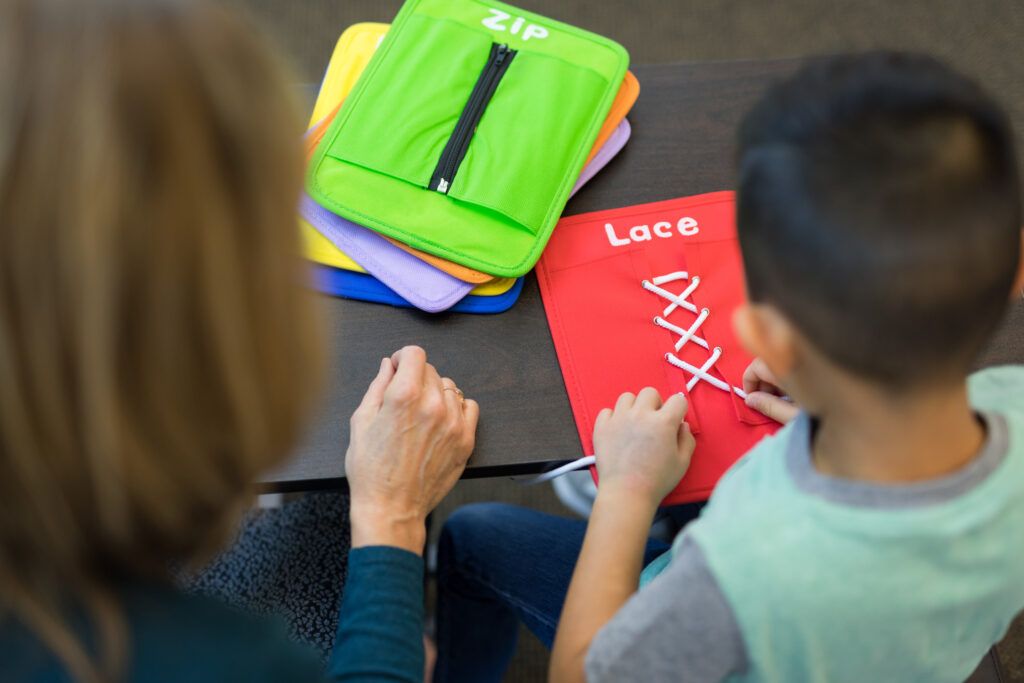
Does your child struggle with tasks like tying shoes, catching a ball, or using scissors? Do everyday movements that require coordination take constant effort and practice, leaving your child frustrated because their hands just won’t do what they want them to?
In some cases, these persistent difficulties are related to dyspraxia, a condition that affects the brain’s ability to plan and organize movement. Understanding dyspraxia is the first step in helping your child overcome that invisible barrier and gain the physical confidence they deserve.
What Is Dyspraxia?
Dyspraxia, sometimes referred to as Developmental Coordination Disorder, affects the brain’s ability to plan and coordinate physical movements. It can help to think of it as a disconnect between your child’s intentions and their actions. Your child knows exactly what they want to do, but their brain has difficulty planning and coordinating the movements needed to carry it out.
The difficulty lies in the internal process the brain uses to:
- Map out the movement: Figure out the specific steps needed to pick up a pencil or kick a ball
- Organize the sequence: Put those steps in the correct order, such as reaching, gripping, and pulling
- Execute the action: Coordinate the muscles so the movement happens smoothly and efficiently
Because dyspraxia affects the way the brain organizes movement, it can influence many parts of your child’s daily life, from learning to pedal a tricycle to managing a heavy backpack or using a fork and knife at dinner.
It is important to remember that these challenges are not related to your child’s intelligence. Many children with dyspraxia are exceptionally bright and creative.
Signs of Dyspraxia in Children
Dyspraxia can affect children in different ways depending on their developmental stage. Some possible signs include:
- Appearing unusually uncoordinated or frequently bumping into objects
- Taking longer than expected to master new motor skills like riding a bike
- Struggling with tasks that involve multiple steps, such as getting dressed
- Having difficulty with handwriting, drawing, or other fine motor activities
- Avoiding playground equipment or physical games because balance feels unreliable
- Becoming frustrated when physical tasks do not go as planned
Dyspraxia is not something your child will simply outgrow, and noticing these signs allows you to get the help your child needs to feel more in control of their body.
How Occupational Therapy Helps Children with Dyspraxia
Occupational therapy plays an important role in helping your child with dyspraxia bridge the gap between their intentions and their physical actions. By identifying where movement planning becomes difficult, a therapist can help your child develop strategies that make everyday tasks easier.
Through engaging, play-based activities, occupational therapy helps your child:
- Learn complex movements: Break down physical tasks into manageable steps until they become more natural
- Build body awareness: Strengthen the sense of where their body is in space, leading to steadier movement
- Improve precision: Develop the fine motor control needed for handwriting and independent self-care
- Build confidence during play: Improve coordination so your child can participate more comfortably in playground activities
As these foundational skills improve, your child begins to trust their body more. This growing confidence often makes children more willing to try new challenges and participate more fully in everyday activities.
Reach Out to Sensational Development for Support
If you are concerned that your child may be experiencing dyspraxia and you live in the Massapequa or East Northport, NY, area, call Sensational Development at (516) 799-2900 or fill out our online contact form to speak with a pediatric occupational therapist. We look forward to helping your child build the coordination, independence, and confidence needed to participate fully in everyday life.
