

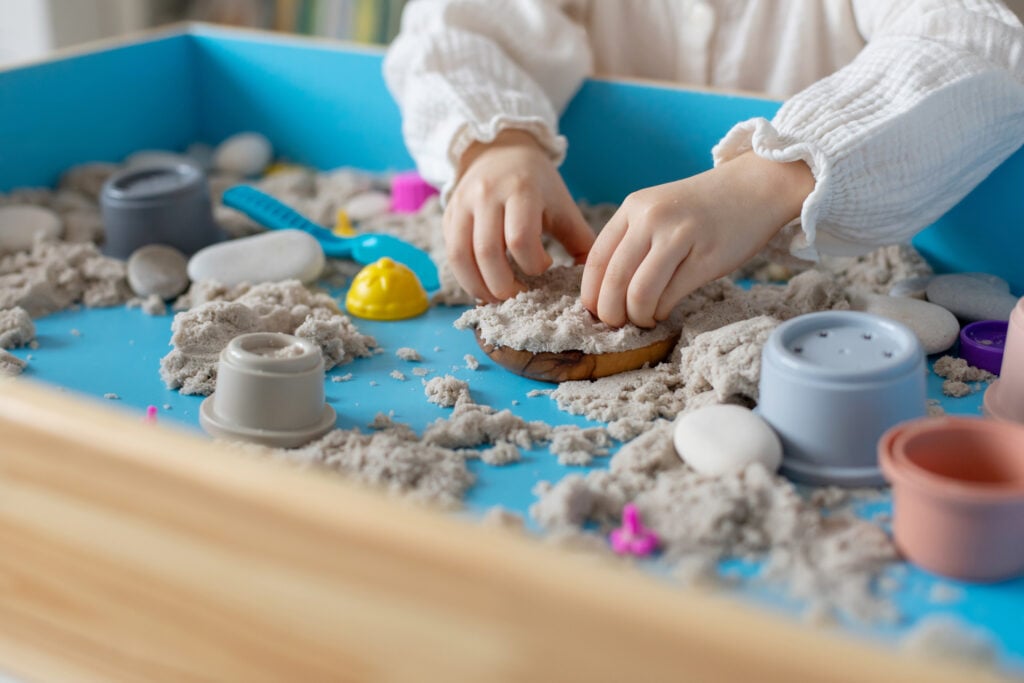
Sensory play, which focuses on activities that engage your child’s senses, does more than entertain them. It’s a fun way to help your child comprehend the world around them while building confidence with any new sensation that may come their way.
The best part is you can create fun, effective DIY sensory activities using everyday household items you probably have on hand. Within minutes, you can turn your home into a sensory playground. Your child will have so much fun they won’t realize they’re building skills that help them feel more focused, calm, and confident.
Benefits of Sensory Play for Your Child’s Development
It’s a fact that your child learns best when they are at play. And when you combine their natural love of play with hands-on sensory exploration, like splashing water or squishing slime, they can naturally:
- Feel more confident in their body. Processing sensory input more effectively helps your child move through their day with greater ease and confidence.
- Become more settled. Engaging in calming sensory activities can help your child manage big emotions and feel more comfortable interacting with others.
- Improve focus. Using targeted play helps your child build the attention needed to finish a meal or complete a school assignment.
- Make everyday tasks easier. Becoming comfortable with new sensations makes everyday tasks like getting dressed for school feel easier and less stressful.
DIY Sensory Activities That Support Different Developmental Skills
You don’t need an instruction manual or special equipment to create fun, effective sensory activities for your child. Most of what you need is already in your home, and with just a few simple setups, you can turn everyday items into powerful learning tools.
Even better, you can choose activities that target your child’s specific needs, whether they need help focusing, staying calm, or feeling more in control of their body.
The following examples show how to create simple, targeted sensory activities that help your child become more open to and comfortable with the everyday sensations they encounter in daily life.
For Improving Focus and Attention
If your child gets easily distracted or has trouble staying with one activity long enough to finish it, these activities can help strengthen their focus in a way that keeps them engaged and builds their ability to stick with a task.
If your child has a hard time sitting still, encourage movement before starting these activities. Jumping jacks or a quick climb on the monkey bars can help them burn off energy, settle in, and stay focused.
- Hidden Treasure Bin: Fill a plastic container with dry rice, beans, or lentils. Bury small treasures like buttons or toy figures for your child to find. This encourages them to slow down, concentrate, and stay engaged in a single goal.
- Household Sorting: Place a mix of small objects like pasta shapes or colorful buttons in a bowl and have your child sort them by size or color. This helps steady their focus and builds the patience needed for classroom routines.
For Building Hand Strength and Coordination
If your child struggles with tasks like using utensils or crayons, it may be because their brain needs more sensory feedback from their hands. These sensory-rich activities help strengthen that connection while building hand strength and coordination.
- Playdough Creations: Give your child playdough to squeeze, roll, and shape using their hands or simple tools like cookie cutters. This helps strengthen hand muscles and build the control they need for tasks like holding a pencil or using utensils.
- Squeeze and Spray Station: Having your child soak sponges in water and squeeze them out helps build hand-eye coordination, which can make tasks like using utensils, holding a pencil, or getting dressed feel easier.
For Supporting Emotional Regulation
If your child becomes easily overwhelmed, has big reactions to everyday situations, or has trouble calming down, these activities can help them feel more settled and better able to handle what’s going on around them.
- Soothing Sensory Bottle: Fill a plastic bottle with water and glitter, then seal it tightly. Watching the glitter slowly form patterns as it settles can give your child the calming pause they need to feel more grounded when they’re upset or overwhelmed.
- Rhythmic Rocking: Use a rocking horse or indoor swing to create gentle, back-and-forth movement. This steady motion can help your child calm their body and feel more settled throughout their day.
For children who need more movement or have trouble sitting still, activities like swinging or jumping can help them feel calmer and more ready to sit down and play.
For Increasing Tolerance to Textures
If your child dislikes certain textures or avoids messy play, start with calming movement or deep pressure activities, like gentle swinging, pushing or pulling heavy objects, or giving firm hugs, before introducing new textures. Once they feel more settled, you can gradually introduce these activities to help them become more comfortable exploring unfamiliar sensations.
- Texture Painting: Spread shaving cream or washable paint on a tray and let your child explore it with their hands at their own pace. This helps your child learn that different textures can feel safe and even fun to explore.
- Get Slimy: Make a simple batch of slime with your child using glue and a small amount of baking soda, then let them stretch and squeeze it with their hands. This helps your child feel more comfortable with sticky or unfamiliar textures.
How Occupational Therapy Supports Sensory Development
If you’ve been engaging in sensory play with your child at home but still feel they may need extra support, pediatric occupational therapy can help. In a safe, playful environment, an occupational therapist looks at your child’s strengths, identifies possible sensory challenges, and creates a targeted therapy plan based on their individual needs.
Through play-based therapy, your child is introduced to sensory experiences in ways that feel manageable, engaging, and successful. As they explore different movements, textures, sounds, and sights with guidance, they begin to build greater comfort, control, and confidence in their body.
Over time, this helps your child feel more secure trying new experiences, handling sensory input with less overwhelm, and exploring their world with more confidence.
Reach Out to Sensational Development for Support
If you are in the Massapequa or East Northport, NY, area and would like to learn more about how sensory play can support your child’s development, call Sensational Development at (516) 799-2900 or fill out our online contact form to speak with a pediatric therapist. We’re here to help your child build the skills they need to become comfortable with the world around them so they can grow and explore with confidence.
