

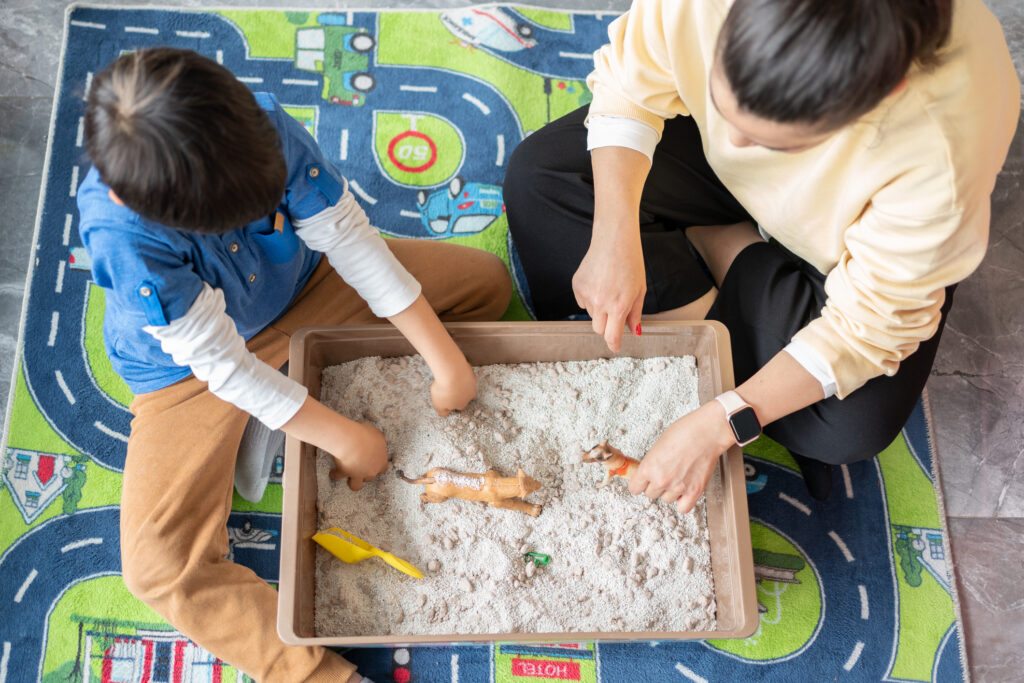
Your child learns about the world in two main ways: through their senses and through play. So it’s no surprise that sensory play is an important part of their development. From splashing in water to painting with their fingers, your child uses their senses to understand how things work. The direct input they get from hands-on exploration is far more powerful for learning than watching a digital screen.
When you understand the value of sensory play and encourage your child to explore it, you’re not just supporting their growth. You’re giving them the tools to make sense of their environment, build confidence, and feel more comfortable engaging with the world around them.
What Is Sensory Play?
Sensory play includes any activity that engages your child’s senses. This can involve touch, sight, sound, smell, movement, balance, or body awareness. When your child digs through sand, pours water from one cup to another, listens to musical toys, climbs playground equipment, or explores textured materials, they are taking in important information about how things look, feel, and move.
These hands-on experiences help your child’s brain sort, understand, and respond to sensory input, making it easier for them to feel comfortable with new sensations and build everyday skills.
The Benefits of Sensory Play
Sensory play supports many important areas of your child’s development. While every child engages in sensory play differently, there are five widely recognized benefits:
- Enhances brain development. Sensory play helps build strong neural connections that support memory, attention, and the ability to take on more complex learning as your child grows.
- Develops motor skills. Sensory activities such as scooping, squeezing, pouring, climbing, and manipulating objects strengthen both fine and gross motor skills, along with hand-eye coordination and overall body control.
- Supports language development. Sensory play naturally builds language skills as your child describes textures, sounds, temperatures, and actions to express their observations.
- Promotes problem-solving and creativity. This type of play also encourages exploration, experimentation, and imaginative thinking. As your child investigates how materials behave or interact, they practice early scientific reasoning and flexible thinking.
- Aids emotional regulation and social skills. Many sensory activities have a calming effect that helps your child feel settled and ready to interact with others. When they’re more regulated, it’s easier for them to join in play, share materials, take turns, and build comfort in social situations.
Simple Ways to Encourage Sensory Play at Home
Sensory play does not require special equipment, and there are plenty of everyday items you can offer your child that stimulate their senses and support development in ways that feel enjoyable and natural. Here are some simple ideas for adding sensory-rich experiences into your child’s playtime:
- Sensory bins: Filling a container with rice, beans, or lentils and letting your child scoop, pour, stir, and sift stimulates touch, sound, and sight while strengthening hand muscles, coordination, and early problem-solving.
- Water play: Using cups, sponges, or funnels to explore pouring, squeezing, and soaking engages touch, sound, temperature, and visual tracking while building hand-eye coordination, cause-and-effect understanding, and calming regulation skills.
- Outdoor exploration: Taking a walk or playing outside and exploring textures like leaves, grass, bark, or sand stimulates touch, sight, and smell, helps your child feel more comfortable with new sensations, and supports body awareness as they move and explore.
- Arts and crafts: Drawing with chalk, finger paint, or shaving cream stimulates sight, touch, and visual-motor integration. As your child spreads, smears, or draws, they strengthen fine motor skills and learn to visually process movement, shape, and color.
- Kitchen time: Helping with safe tools like whisks, strainers, measuring cups, or spoons engages touch, sound, sight, and sometimes smell while building coordination and giving your child chances to mix, pour, pretend to cook, and experiment with different textures.
- Taste activities: Creating gentle taste-based experiences like flavored ice chips, edible finger paint, or simple tasting games stimulates taste, smell, and oral exploration, helping your child grow more comfortable with new flavors and reducing food-related sensory issues.
- Sound-based play: Exploring sound by shaking bottles filled with rice or beads, tapping wooden spoons, or using musical toys stimulates hearing and teaches your child about rhythm, volume, and auditory attention.
- Obstacle courses: Setting up simple courses with cushions, tunnels, or stepping stones engages balance, movement, sight, and body awareness while supporting coordination, body control, and confidence as your child navigates space.
- Clay or playdough play: Squeezing, shaping, and rolling clay or playdough stimulates touch, strengthens hand muscles, supports creativity, and helps your child become more comfortable with a variety of textures.
- Back-and-forth motion: Introducing gentle rocking with a rocking chair, indoor swing, or cradle seat engages balance, movement, sight, and body awareness while helping your child experience calming motion and feel more settled during play.
How Occupational Therapy Can Help Your Child With Sensory Play
If your child’s discomfort with sensory input is keeping them from enjoying sensory play, they may benefit from extra support. Pediatric occupational therapy can help by giving your child a safe, playful environment where new sensations feel predictable and manageable. An occupational therapist will get to know your child’s sensory preferences, identify what feels overwhelming or confusing for them, and introduce sensory experiences in ways that help your child feel successful rather than pressured.
Occupational therapy is naturally play-based, which means your child learns through fun, engaging activities that support curiosity and confidence. By exploring sensory materials, movement, and hands-on experiences with a therapist’s guidance, your child strengthens the foundations of regulation, comfort, and everyday skills. Over time, these positive, child-led experiences help your child carry sensory confidence into familiar routines at home, in school, and with friends.
Reach Out to Sensational Development for Support
If you are in the Massapequa or East Northport area and would like to learn more about how occupational therapy can support your child’s sensory play, call Sensational Development at (516) 799-2900 to speak with a pediatric occupational therapist. We are here to help your child feel calm, confident, and supported as they explore their world through play.
Stay connected with us! Our email newsletter is packed with practical strategies, updates, and bonus content to help you support your child with confidence.
Sign up now: https://sensationaldevelopment.us8.list-manage.com/subscribe
